


Snopes
4.454.00 Reviews
App Specs
- Version
- 3.7
- Updated On
- License
- Free
- Downloads
- 10,000+
- Developer
- Snopes, Inc
- Categories
- News & Magazines
- Platform
- Android
Screenshots
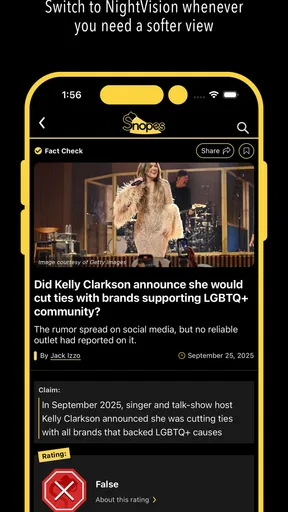
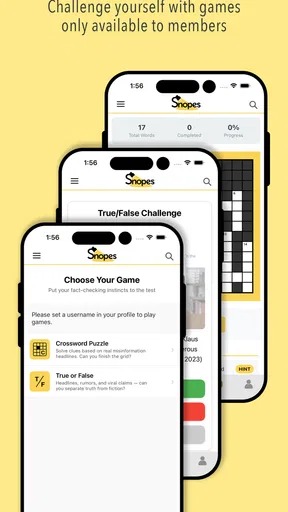
 Analysis by AppCompare
If you're like me, you’ve probably found yourself in a heated debate with friends over whether some bizarre tale is fact or fiction. Enter Snopes, the app that’s like having a pocket-sized detective at your fingertips. This app is your go-to for debunking myths, verifying rumors, and getting the scoop on whether that viral story is legit or just another internet hoax.
The first-week appeal: curiosity with a purpose
The initial attraction is easy to understand: when a surprising claim lands in a group chat, I can look for a fact check instead of relying on a confident-sounding caption. Snopes is a free News & Magazines app from Snopes, Inc, and its familiar subject matter makes it approachable even if you have never used a dedicated fact-checking app. Its average rating is 4.2 from around 90 ratings, with 10K+ installs, so it has found an audience without feeling like a sprawling social platform.
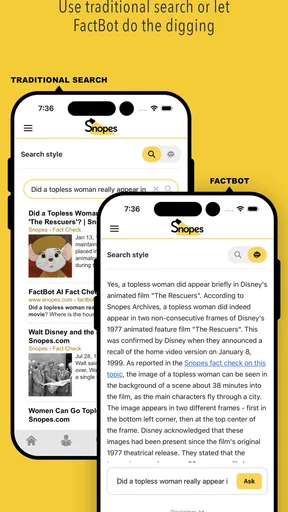
A practical first use is to search the exact wording of a claim rather than a broad topic. A rumor may have been repeated in several slightly different forms; narrowing the phrase helps avoid treating a related story as proof of the version you saw. When a result is relevant, I’d read beyond its verdict and check what evidence and context the article gives. That extra step matters because a short label is easy to pass along, but the reasoning is what helps you explain the finding fairly.
For example, imagine a friend shares a dramatic warning just before a family gathering. I would open the claim, search its distinctive phrase, and read the explanation before replying. If the article addresses a different version or leaves an important detail unresolved, I would avoid presenting it as a complete answer. That restrained approach is one of the most useful habits a fact-checking app can encourage: it helps turn a quick reaction into a more careful conversation.
What is Snopes All About?
So, what makes Snopes stand out in the sea of fact-checking apps? For starters, it’s been around since the mid-90s, which might make it the grandparent of internet truth-tellers. But don’t let its age fool you—this app is as sharp as ever. With an easy-to-navigate interface and a massive database of fact-checked stories, Snopes provides users with detailed investigations and verdicts on everything from political claims to urban legends.
Getting Started with Snopes
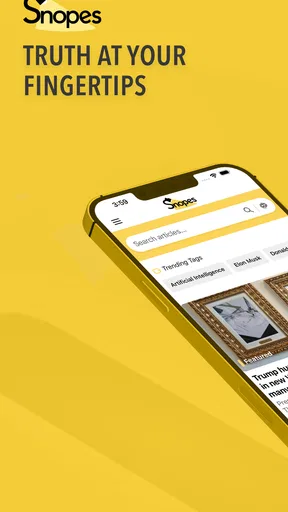
Firing up Snopes is like jumping into a well-organized library of truth. The app is available for both Android and iOS, and downloading it is a breeze. Once you’ve got it installed, you’re greeted with a clean, intuitive home screen. Here, you can see trending topics, which are perfect for staying updated on what’s buzzing. There’s also a handy search bar for those moments when you’ve heard something fishy and need a quick fact check.
Features That Stand Out
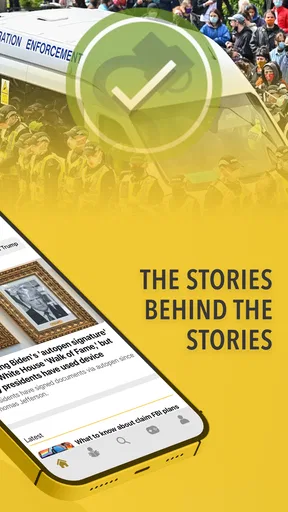
One of my favorite things about Snopes is its "Hot 50" section. This is where you’ll find the most read and shared articles, giving you a snapshot of current internet chatter. It’s a neat way to stay in the loop without getting lost in endless scrolling.
Worth Reading Before You Choose

Flipboard Shows What News Apps Must Do Beyond the Feed

Switching to Android Auto Means Rethinking Your Driving Routine

Google Calendar Makes a Crowded Week Easier to Manage

Ludo King Makes the Most of the Minutes Between Plans

Baby Panda World Brings Quick Play to Modern Phones, but Its Game Library Feels Busy

ESPN’s Live Game View Makes Following Close Games Easier
Another cool feature is the "Randomizer". Feeling adventurous? This feature serves up a random article from the Snopes archive. It’s perfect for those moments when you’re in the mood to learn something unexpected.
Making the archive useful month after month
Curiosity is a good reason to open a fact-checking app once; recurring value comes from using it when a real question appears. I find the search function more useful as a reference tool than as a feed to browse every day. When a claim resurfaces, the archive can help me revisit the explanation and share something more substantial than a screenshot or a friend’s summary.
The "Hot 50" can also serve as a temperature check on what people are paying attention to, but popularity is not the same as importance or truth. I would use it to spot topics worth investigating, then open an article and judge its evidence on its own. The Randomizer works differently: it is a discovery feature, best suited to a spare moment when I want to read something unexpected, not a way to monitor urgent news. Keeping those purposes separate makes the app feel less like another endless feed.
Why Use Snopes?
In today’s world, misinformation spreads like wildfire. Having Snopes in your digital toolbox is like having a personal myth-busting assistant. Whether it's debunking that chain email your aunt forwarded or verifying a politician's claim, Snopes has your back.
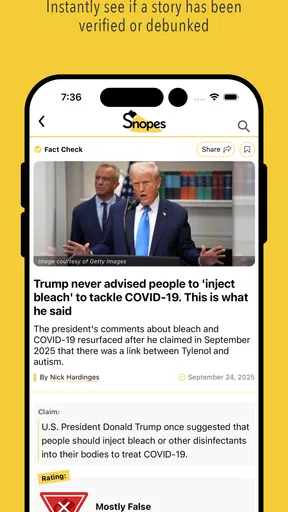
One feature I absolutely love is the detailed analysis provided for each story. Snopes doesn’t just tell you if something is true or false; it explains why. This added context is invaluable and helps users understand the nuances behind each claim.
How I would check a claim before sharing it
My most useful workflow is deliberately simple: search the wording that caught my attention, open the closest match, and compare the article’s scope with the claim in front of me. I then look for qualifications that could change the takeaway, such as a specific date, location, or version of a story. This is a small but important safeguard. A fact check can be accurate about one instance without settling every later retelling of the same rumor.
If I want to send the result to someone, I share the article rather than copying only its verdict. That gives the other person a chance to read the explanation and see the context for themselves. It is especially helpful in a tense discussion: an article with reasoning is less likely to sound like a bare assertion that one person should simply accept. Snopes can support a conversation, but it cannot make someone receptive, so I would use it to clarify rather than to score a point.
User Experience
The user experience on Snopes is top-notch. The app is responsive and quick, without any annoying lag or crashes. Navigating through different sections is seamless, and the articles are well-written and easy to digest. Plus, there are no distracting ads popping up every few seconds, which is a huge bonus.
For those who love to share knowledge, Snopes makes it easy to share articles directly from the app to your social media platforms or via email. It’s a great way to spread truth and keep your friends informed.
Maintenance, cost, and who should skip it
For ordinary use, maintenance is light: I would keep the app available for the moments when a rumor needs checking, rather than feel obliged to open it on a schedule. The current version is 3.2, and the minimum OS requirement is 7.0. Its content rating is Everyone 10+, a useful detail for families deciding whether it suits a younger reader. The app is free to install, while in-app purchases range from $4.99 to $199.99 per item, so I would review the purchase choices carefully before spending.
That range also makes it sensible to decide what you want from the app before considering a purchase. If you mainly look up occasional viral claims, the free starting point may be enough to judge whether it fits your routine. Someone who wants a constant breaking-news feed, broad coverage of every subject, or a place to debate other readers may be better served by a news app or a community platform. Snopes is most compelling when the task is checking a specific claim and understanding the explanation, not replacing every other way you follow the news.
Room for Improvement
While Snopes is pretty fantastic, there’s always room for a little improvement. One thing I’d love to see is more interactive features, like quizzes or polls, to make fact-checking even more engaging. Also, a feature that alerts users about new debunked myths or trending false claims would be a welcome addition.
Another potential enhancement could be integrating a community forum. This would allow users to discuss topics further, share personal experiences, and perhaps even suggest new topics for the Snopes team to investigate.
Where fact-checking can feel tiring
The main fatigue risk is not a complicated setup but the nature of the subject. Checking every alarming post can turn a useful habit into another stream of worry, and browsing popular claims without a question in mind can become passive scrolling. I would reserve the app for claims that matter to a decision, a conversation, or a message I am considering forwarding. That boundary keeps verification useful without making every online exchange feel like homework.
There is also a trade-off between a quick verdict and a full explanation. Reading carefully takes longer than reacting to a headline, and a result may not settle a claim that has changed since it was first shared. When an article does not match the exact wording or situation I encountered, I would treat it as background rather than a final answer. For very current developments, a news source reporting the latest events may be the better first stop, followed by a fact check when the specific claim can be assessed.
Final Thoughts
Overall, Snopes is a must-have app for anyone who values truth and accuracy in the age of information overload. It’s reliable, easy to use, and provides a wealth of information at your fingertips. Whether you’re debunking myths for fun or for serious fact-checking, Snopes has got you covered.
If you haven’t already, give Snopes a try. It’s available for free, but there’s also a subscription option for those who want to support the platform and enjoy an ad-free experience. Trust me, once you start using it, you’ll wonder how you ever navigated the web of information without it!
Does it earn a lasting place?
For me, the lasting value is practical rather than habitual: I would not need to open it every morning, but I would want it within reach when a dubious story starts circulating. That makes it a useful companion to a general news app, not a replacement for one. A reader who enjoys browsing internet lore may also get pleasure from the archive and Randomizer, while someone who only wants fast headlines may rarely return after the first burst of curiosity.
My recommendation is to keep Snopes if you are willing to read the reasoning, check whether an article addresses the exact claim, and share the full context instead of just a verdict. Skip it if you expect a live news ticker, a social discussion space, or an effortless answer to every complicated question. Used with those limits in mind, it can turn a familiar online impulse—“Is this really true?”—into a more thoughtful, repeatable habit.
Pros
- Comprehensive fact-checking database.
- User-friendly interface and navigation.
- Timely updates on trending topics.
- Wide range of categories covered.
- Trusted by a global audience.
Cons
- Some articles lack detailed sources.
- Occasional slow loading times.
- Ad-supported content can be distracting.
- Limited offline access to articles.
- No option for user submissions.
FAQs for Snopes
What is the primary purpose of the Snopes app?
The Snopes app is designed to help users verify the accuracy of information they come across online or in daily life. It provides fact-checking services, allowing users to search for and read debunked myths, rumors, and misinformation. This makes it an essential tool for anyone wanting to ensure the reliability of the information they consume.
Is the Snopes app free to use?
Yes, the Snopes app is free to download and use. However, it may offer in-app purchases or a subscription model for additional features or ad-free browsing. This allows users to enjoy its comprehensive database of fact-checked articles without cost, with optional enhancements for a premium experience.
How reliable is the information provided by the Snopes app?
Snopes is renowned for its rigorous fact-checking process. The team behind the app conducts extensive research and cross-references multiple sources before publishing any claim or article. While no source is infallible, Snopes is widely trusted for its commitment to accuracy and transparency in debunking false information.
Does the Snopes app cover all types of misinformation?
The Snopes app covers a wide range of topics including politics, science, pop culture, and viral internet rumors. However, it may not cover every possible misinformation topic, given the vast amount of content circulating online. Users can suggest topics for review, helping the app expand its database continually.
How frequently is the content on Snopes updated?
The content on Snopes is regularly updated as new information and claims arise. The team works diligently to keep the app's database current and relevant, often adding new articles daily. Users can rely on Snopes for the latest in verified information and updates on trending misinformation topics.


